
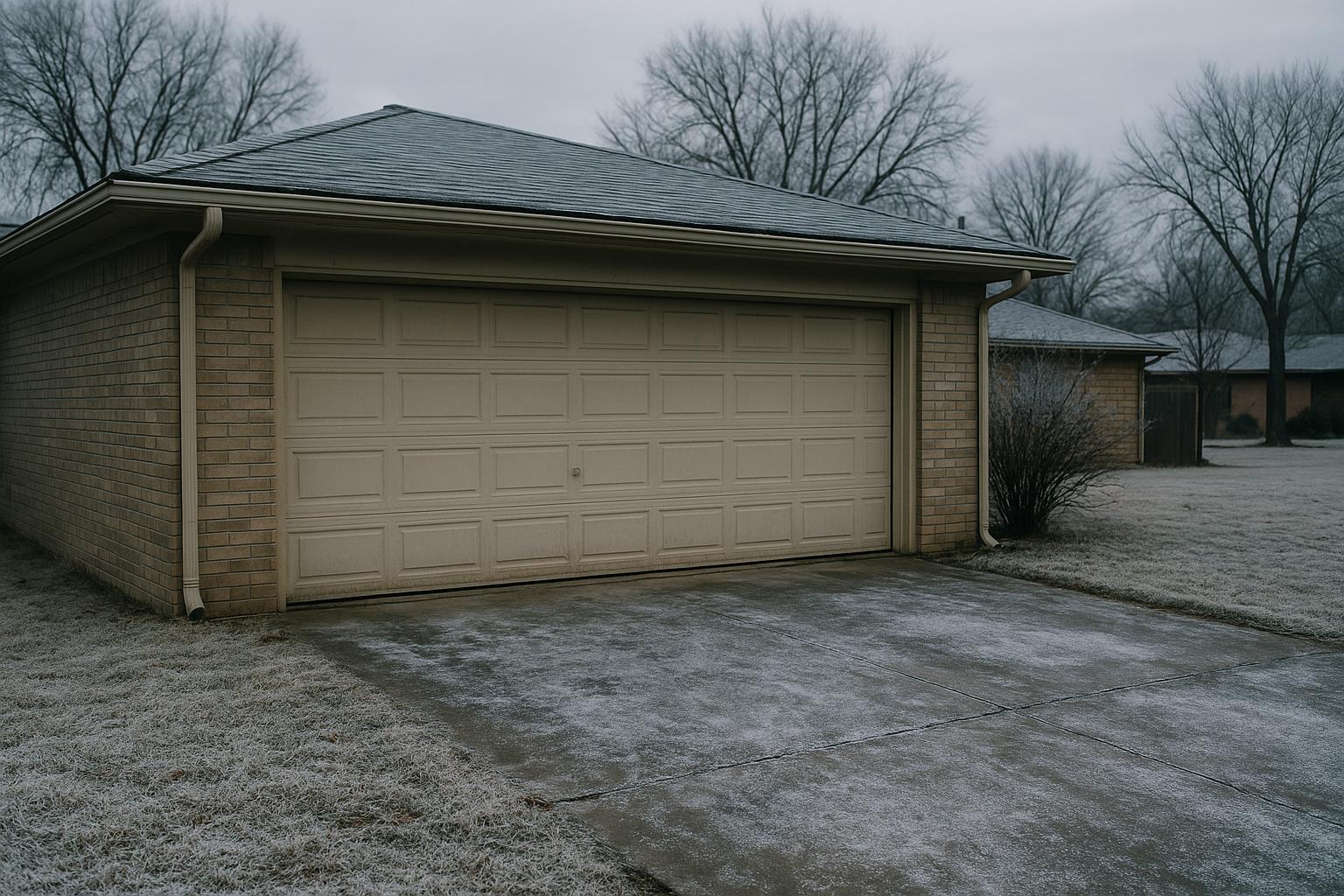
Why Cold Weather Wreaks Havoc on Your Garage Door
Oklahoma winters may not be as brutal as what you'd find up north, but Broken Arrow still sees its share of freezing temperatures, ice storms, and sudden cold snaps. And when the mercury drops, your garage door is often one of the first things to let you know about it.
If you've ever walked out on a cold morning, pressed the button on your opener, and heard the motor strain without the door budging, you know how frustrating it can be. The good news is that most cold-weather garage door problems have straightforward causes — and most of them are preventable.
Common Cold-Weather Garage Door Problems
1. The Weatherstripping Has Frozen to the Ground
This is the most common reason a garage door won't open in freezing temperatures. The rubber weatherstripping along the bottom of your door can freeze to the concrete floor or driveway surface overnight, especially after rain, sleet, or melting snow refreezes.
When your opener tries to lift the door, it meets resistance from the frozen seal. In many cases, the opener's safety features will prevent it from forcing the door open, which is actually a good thing — forcing it can tear the weatherstripping or damage the opener.
What to do:
- Try gently tapping along the bottom of the door with a rubber mallet or the sole of your boot to break the ice seal.
- Pour warm (not boiling) water along the bottom edge to melt the ice.
- Once the door is free, clear any standing water away from the base to prevent it from refreezing.
- Apply a silicone-based lubricant to the weatherstripping to help prevent future freezing.
2. Metal Components Have Contracted
Metal contracts in cold temperatures. Your garage door's tracks, springs, and hardware are all made of metal, and when temperatures drop significantly, these components can shrink just enough to cause problems. Tracks may become slightly misaligned, rollers may bind, and springs may lose some of their tension.
This is especially noticeable on older garage doors where parts have already experienced years of wear. The cold simply pushes marginal components past their limits.
3. Thickened Lubricant
The grease and lubricant on your garage door's moving parts — rollers, hinges, springs, and tracks — can thicken or harden in cold weather. When lubricant becomes sluggish, it creates more friction instead of reducing it. You might notice the door moves more slowly than usual, makes grinding sounds, or struggles to open smoothly.
What to do:
- Use a garage door-specific silicone or lithium-based lubricant, which performs better in cold temperatures than standard grease.
- Apply it to the springs, rollers, hinges, and tracks at the start of winter and again mid-season.
4. The Opener's Force Settings Need Adjustment
Your garage door opener has force settings that control how much power it uses to open and close the door. In cold weather, the added resistance from contracted metal, stiff lubricant, and frozen seals can exceed the opener's default force setting. When that happens, the opener may start to lift the door and then stop, or it may not move the door at all.
Most openers have force adjustment screws or digital settings that allow you to increase the opening force slightly. However, be cautious — setting the force too high can mask other problems and potentially cause damage. If you're unsure, it's best to have a professional take a look.
5. Broken Springs
Garage door springs are under tremendous tension, and cold weather increases the likelihood of a spring snapping. Metal becomes more brittle in low temperatures, and if your springs are already nearing the end of their lifespan, a cold snap can be the final straw.
A broken spring is usually obvious — you'll hear a loud bang from the garage, and the door will feel extremely heavy or won't open at all. Do not attempt to open a garage door with a broken spring manually or with the opener. This is a repair that requires professional tools and experience.
How to Winter-Proof Your Garage Door in Broken Arrow
Prevention is always easier and cheaper than emergency repairs. Here are steps you can take before cold weather arrives to keep your garage door functioning reliably:
- Inspect and replace worn weatherstripping. If the rubber seal along the bottom of your door is cracked, brittle, or compressed flat, replace it before winter. A good seal keeps cold air, moisture, and pests out of your garage.
- Lubricate all moving parts. Use a cold-weather-rated silicone or lithium spray on springs, rollers, hinges, and tracks. Avoid WD-40 for this purpose — it's a solvent, not a long-term lubricant.
- Check the balance of your door. Disconnect the opener and manually lift the door halfway. If it stays in place, it's properly balanced. If it falls or rises, the springs may need adjustment — a job best left to a technician.
- Test the opener's safety features. Place a block of wood on the ground where the door closes. If the door doesn't reverse when it contacts the wood, the opener needs servicing.
- Clear the area around the door. Make sure water drains away from the base of the door to minimize ice buildup. Keep the tracks free of debris that could interfere with smooth operation.
When to Call a Professional
Some cold-weather garage door issues are easy DIY fixes. Melting ice from the weatherstripping or applying lubricant are things any homeowner can handle. But other problems — broken springs, opener malfunctions, misaligned tracks, or doors that won't stay balanced — require professional attention.
Attempting to repair high-tension springs or recalibrate an opener without the right knowledge can result in serious injury or further damage to your door system. If your garage door is giving you trouble this winter and basic troubleshooting hasn't solved the problem, it's time to call in a pro.
Stay Ahead of the Cold
Here in Broken Arrow, we know the weather can change fast. One day it's 60 degrees, and the next morning there's ice on everything. Your garage door takes the brunt of that weather every single day, and a little preventive maintenance goes a long way toward avoiding a frustrating — and potentially expensive — breakdown on the coldest morning of the year.
At Broken Arrow Garage Door, we help homeowners across Broken Arrow, Tulsa, Bixby, Owasso, Jenks, and Coweta keep their garage doors running smoothly through every season. Whether you need a quick tune-up before winter or emergency repair service when something goes wrong, we're here to help. Give us a call, and we'll make sure your garage door is ready for whatever Oklahoma weather throws at it.