
Why Is Your Garage Door So Loud?
If your garage door has started grinding, squealing, rattling, or banging every time it opens or closes, you're not alone. Noisy garage doors are one of the most common complaints we hear from homeowners in Broken Arrow, and for good reason — a loud garage door is hard to ignore, especially when your bedroom or living space shares a wall with the garage.
The good news is that most garage door noises have identifiable causes, and many of them are straightforward to fix. The bad news? Ignoring the noise can lead to bigger, more expensive problems down the road. Let's walk through the most common reasons your garage door is making a racket and what you can do about each one.
1. Worn or Dry Rollers
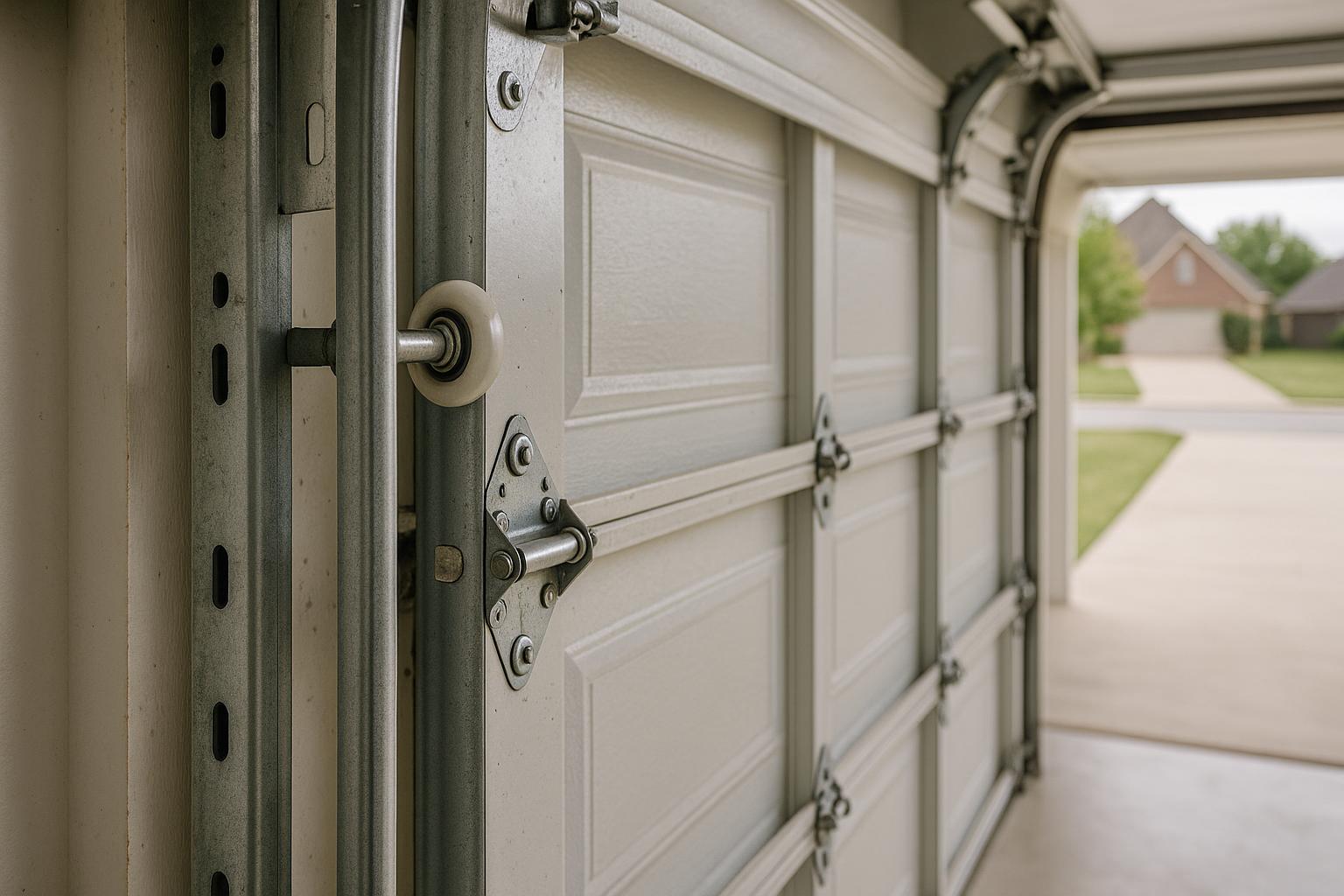
Garage door rollers are small wheels that guide your door along the tracks as it opens and closes. Over time, these rollers wear down, and the bearings inside them can dry out or deteriorate. When that happens, you'll typically hear a grinding or squealing sound every time the door moves.
There are two main types of rollers:
- Steel rollers — These are the most common and least expensive, but they're also the loudest. They tend to wear out faster and create metal-on-metal noise as they age.
- Nylon rollers — These are significantly quieter and longer-lasting. If noise reduction is a priority, upgrading to nylon rollers is one of the best investments you can make.
If your rollers are visibly cracked, chipped, or wobbling in the track, it's time for a replacement. A garage door technician can swap them out quickly, and you'll notice the difference immediately.
2. Lack of Lubrication
This is probably the single most common — and most easily fixable — cause of a noisy garage door. Your garage door system has numerous moving parts, including springs, hinges, rollers, and the opener chain or screw drive. All of these components need periodic lubrication to operate smoothly and quietly.
Here's what you should lubricate and how often:
- Torsion springs — Apply a garage door-specific lubricant spray along the length of the springs every six months.
- Hinges — Lubricate the pivot points where the hinges bend as the door moves.
- Rollers — If you have steel rollers with bearings, apply lubricant to the bearings. Nylon rollers generally don't require lubrication.
- Opener chain or screw — If your opener uses a chain or screw drive, keep it lubricated per the manufacturer's instructions.
Use a silicone-based or lithium-based garage door lubricant — not WD-40. WD-40 is a solvent and degreaser, not a long-term lubricant. It can actually strip away existing lubrication and make the problem worse over time.
3. Loose Hardware
Your garage door cycles up and down hundreds of times a year. All that movement creates vibration, and vibration gradually loosens nuts, bolts, and brackets throughout the system. Loose hardware is a common source of rattling and banging noises.
Take a socket wrench and carefully tighten all the bolts on your door's hinges, roller brackets, and the mounting brackets for your opener. Be careful not to overtighten — you just want them snug. If you notice any brackets that are cracked or bent, those should be replaced rather than simply tightened.
4. An Old or Worn Chain Drive Opener
If you have a chain drive garage door opener, some noise is normal — chain drives are inherently louder than belt drive models. However, if the noise has gotten noticeably worse, the chain may have loosened or stretched over time. A sagging chain can slap against the rail and create a loud, jarring sound during operation.
Adjusting the chain tension can help, but if your opener is more than 15 years old, it may be worth considering an upgrade to a belt drive opener. Belt drive openers use a reinforced rubber belt instead of a metal chain, making them dramatically quieter. For homeowners in Broken Arrow whose garages are attached to their homes, this upgrade can make a real quality-of-life difference.
5. Misaligned or Damaged Tracks
The metal tracks on either side of your garage door guide it as it opens and closes. If these tracks become misaligned, bent, or clogged with debris, the door can scrape, grind, or pop as it moves through the damaged section.
Visually inspect your tracks for:
- Gaps between the rollers and the track
- Bends, dents, or crimps in the metal
- Buildup of dirt, grease, or small debris
Minor debris can be cleaned out with a damp cloth. However, if the tracks are bent or misaligned, this is a job for a professional. Attempting to force tracks back into alignment without the right tools can make the problem worse or create a safety hazard.
6. Worn Torsion Springs
Torsion springs bear the full weight of your garage door, and as they age, they can start to creak, groan, or pop. If you're hearing a rhythmic squeaking or a loud bang, your springs may be nearing the end of their lifespan.
Spring work is one area where we strongly recommend calling a professional. Torsion springs are under extreme tension and can cause serious injury if handled improperly. If you suspect your springs are the source of the noise, have a technician inspect them to determine whether they need lubrication, adjustment, or replacement.
7. Vibration Noise from the Opener
Sometimes the noise isn't coming from the door itself but from the opener vibrating against the ceiling or the mounting bracket. This is especially common with older openers or installations where the mounting hardware has loosened over time.
Anti-vibration pads or rubber isolator kits can be installed between the opener and its mounting bracket to absorb vibration and reduce noise transmission into your home's structure. This is a simple, inexpensive fix that can make a surprising difference.
When to Call a Professional
Some garage door noises can be resolved with a can of lubricant and a wrench. Others point to problems that require professional diagnosis and repair. As a general rule, call a garage door technician if:
- The noise is accompanied by the door moving unevenly or getting stuck
- You notice frayed cables, cracked rollers, or damaged springs
- The noise started suddenly after a loud bang or pop
- You've lubricated and tightened everything but the noise persists
At Broken Arrow Garage Door, we help homeowners across Broken Arrow and the surrounding Tulsa metro area diagnose and fix noisy garage doors every week. Whether you need a simple tune-up, a roller replacement, or a full opener upgrade, we'll identify the source of the problem and give you honest recommendations — no upselling, no surprises.
Keep Your Garage Door Quiet with Regular Maintenance
The best way to prevent a noisy garage door is to stay ahead of wear and tear with regular maintenance. A professional tune-up once or twice a year keeps all your components lubricated, properly adjusted, and in good working order. It also gives a trained technician the chance to catch small issues before they become big, noisy, expensive ones.
If your garage door has been getting louder and you're ready to enjoy some peace and quiet, give us a call. We serve Broken Arrow, Tulsa, Bixby, Owasso, Jenks, and Coweta with prompt, professional garage door service you can count on.