
Your Garage Door Springs Are Doing More Work Than You Think
Every time you open or close your garage door, the springs are doing the heavy lifting — literally. A standard two-car garage door can weigh between 150 and 250 pounds, and the springs are responsible for counterbalancing all of that weight. Without properly functioning springs, your garage door opener would burn out quickly, and manually lifting the door would be nearly impossible.
For homeowners in Broken Arrow, where we rely on our garages daily — whether it's for parking, storage, or keeping out Oklahoma's unpredictable weather — understanding the lifespan of your garage door springs can save you from unexpected breakdowns and costly emergency repairs.
How Long Do Garage Door Springs Typically Last?
The lifespan of a garage door spring is measured in cycles. One cycle equals one full open and one full close of the door. Most standard torsion springs are rated for approximately 10,000 cycles, while high-cycle springs can be rated for 25,000 or even 50,000 cycles.
So how does that translate into years? It depends on how often you use your garage door:
- 2 cycles per day (once out, once in): A standard spring lasts roughly 13-14 years.
- 4 cycles per day (typical for a busy household): A standard spring lasts about 7 years.
- 6-8 cycles per day (multiple drivers, frequent use): A standard spring may only last 3-5 years.
If you have a large family or use your garage as a primary entry point — which is common in many Broken Arrow neighborhoods — your springs are accumulating cycles faster than you might expect.
Torsion Springs vs. Extension Springs
There are two main types of garage door springs, and each has different characteristics when it comes to wear and replacement:
Torsion Springs
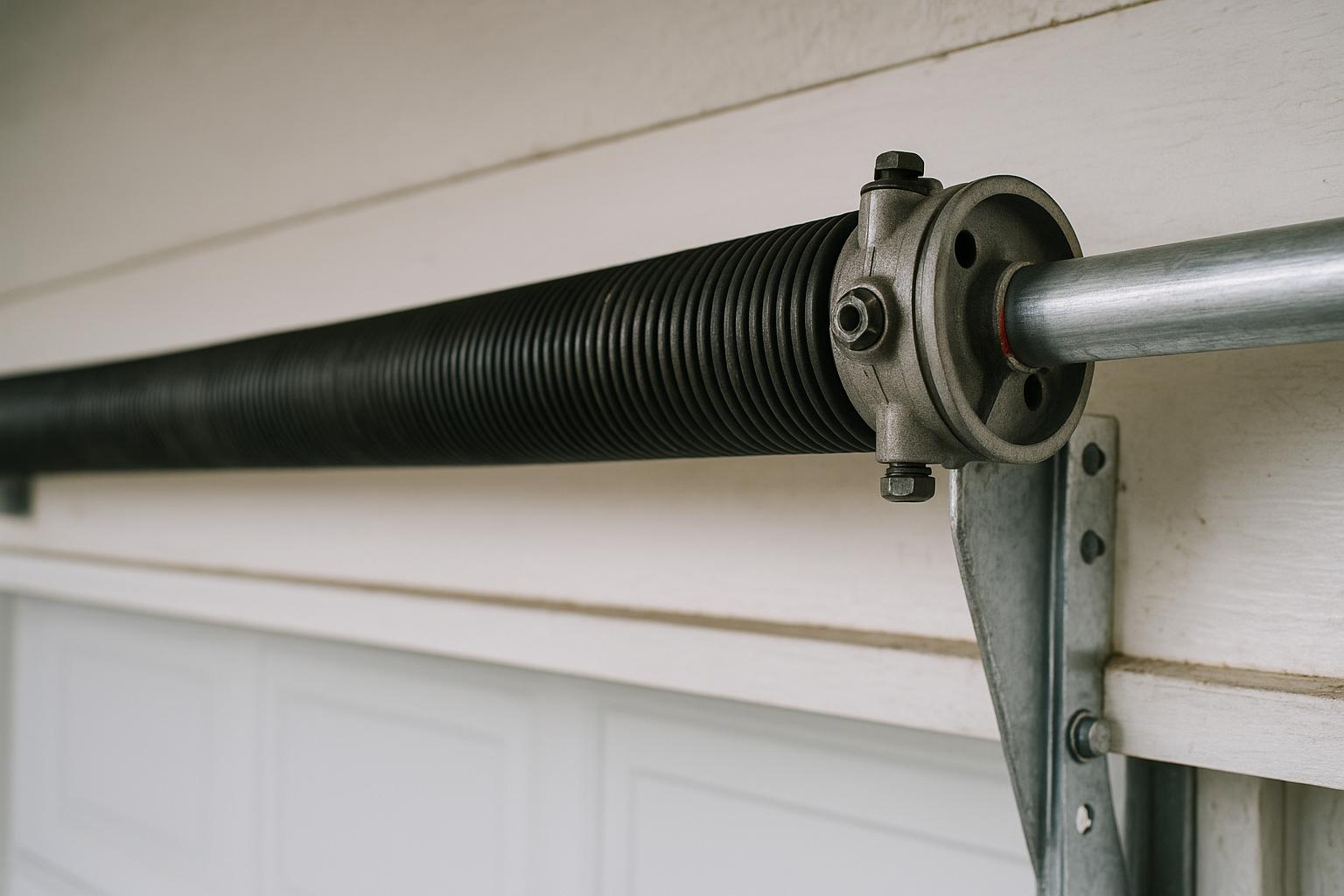
Torsion springs are mounted on a metal shaft directly above the garage door opening. They twist to store energy and are generally considered the more durable and safer option. Most modern garage doors in the Tulsa metro area use torsion spring systems. When they break, the spring typically stays on the shaft, reducing the risk of it flying across your garage.
Extension Springs
Extension springs run along the horizontal tracks on either side of the door. They stretch and contract to provide lifting force. These are more common on older garage doors and lighter single-car doors. Extension springs can be more dangerous when they break because they can snap and fly off if they don't have safety cables installed.
Regardless of the type, both will eventually wear out and need replacement. Knowing which type you have helps you understand what to expect during the replacement process.
Warning Signs Your Springs Are Wearing Out
Springs rarely fail without giving you some warning signs first. Here's what to watch for:
- The door feels heavier than usual: If your garage door seems harder to lift manually, the springs may be losing tension.
- The door doesn't stay open: A properly balanced door should stay in place when opened halfway. If it slides down, the springs are likely weakening.
- Visible gaps in the spring coils: A healthy torsion spring has tightly wound coils. If you notice gaps or separation, the spring is stretched beyond its intended capacity.
- The opener struggles or strains: If your garage door opener is working harder, making louder noises, or moving the door more slowly, worn springs could be forcing it to compensate.
- A loud bang from the garage: If you hear a sudden, loud noise — almost like a gunshot — from your garage, a spring has likely already broken. This is one of the most common calls we get from homeowners across Broken Arrow and the surrounding areas.
- The door is crooked or uneven: If one spring breaks and the other is still intact, the door may open unevenly, putting stress on the tracks and opener.
Can You Replace Garage Door Springs Yourself?
We understand the DIY spirit — it's strong here in Oklahoma. But garage door spring replacement is one job we strongly recommend leaving to professionals. Here's why:
- Extreme tension: Torsion springs are under tremendous force. An improperly handled spring can cause serious injury or even death.
- Specialized tools required: Proper replacement requires winding bars, clamps, and other tools that most homeowners don't have on hand.
- Precise calibration: Springs need to be wound to an exact number of turns based on the door's weight and size. Too few turns and the door won't open properly. Too many and you risk the spring snapping prematurely.
- Matching springs correctly: Installing the wrong spring size or type can damage your door, tracks, and opener over time.
A trained technician can complete a spring replacement safely in about an hour, and you'll have peace of mind knowing it's done correctly.
Should You Replace Both Springs at Once?
If your garage door has two torsion springs and one breaks, we almost always recommend replacing both at the same time. Here's the reasoning: if one spring has reached the end of its life, the other one is likely close behind. Replacing both springs together ensures balanced performance and saves you from paying for a second service call in a few weeks or months.
It's a small additional investment upfront that saves you money and hassle in the long run.
How to Extend the Life of Your Garage Door Springs
While springs will eventually wear out no matter what, regular maintenance can help you get the most out of their lifespan:
- Lubricate the springs regularly: Apply a silicone-based or white lithium grease lubricant to your springs every few months. This reduces friction and prevents rust, which is especially important with the humidity we get during Broken Arrow summers.
- Schedule annual maintenance: A professional tune-up includes inspecting springs, checking balance, tightening hardware, and lubricating all moving parts. Think of it like an oil change for your garage door.
- Keep the door balanced: An unbalanced door puts extra strain on the springs. You can test the balance by disconnecting the opener and manually lifting the door halfway. If it doesn't stay in place, it's time for an adjustment.
- Upgrade to high-cycle springs: If you're replacing springs, consider investing in high-cycle options. They cost more upfront but can last two to three times longer than standard springs.
When It's Time, We're Here to Help
If you're noticing any of the warning signs mentioned above, or if a spring has already broken, don't wait. A broken spring puts extra strain on your opener and makes your garage door a safety hazard. At Broken Arrow Garage Door, we provide fast, professional spring replacement services throughout Broken Arrow, Tulsa, Bixby, Owasso, Jenks, and Coweta.
We show up on time, explain exactly what needs to be done, and get your door back in working order — usually the same day. Whether you need a single spring replaced or want to upgrade to a high-cycle system, our experienced technicians are ready to help.
Give us a call today to schedule an inspection or spring replacement. Your garage door works hard for you every day — make sure it has the support it needs to keep running smoothly.